
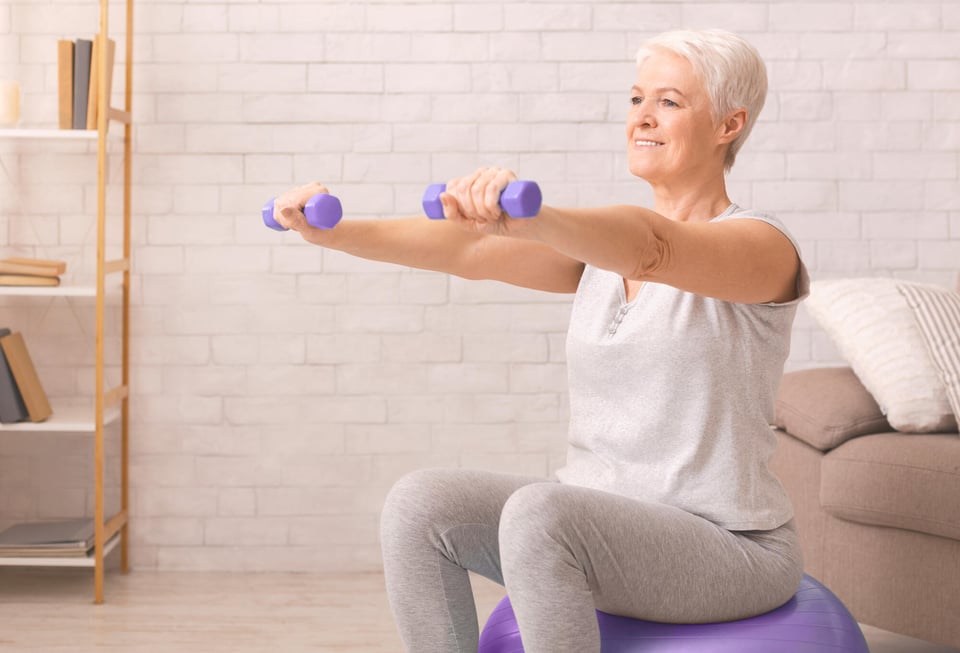
Seated exercises keep older adults active, flexible, and energized. When mobility limitations arise, many people assume activity must stop. But at Cardinal Place, Cambridge, OH, we prove that's far from true.
Our adaptive workouts and friendly group sessions are designed to meet residents where they are, both physically and emotionally. Whether recovering from surgery, managing arthritis, or simply preferring a slower pace, residents benefit from routines that:
- Build strength
- Improve circulation
- Support independence
With only 14.3% of adults aged 65 and older meeting federal guidelines for both aerobic and muscle-strengthening activities, it's more important than ever to offer safe alternatives to stay active (CDC).
In this blog post, you'll discover how these adaptive workouts support senior physical wellness and how our community keeps residents engaged through gentle fitness group exercise routines.
Why Is Senior Movement Important?
Physical activity helps preserve muscle mass, balance, and joint health, and chair-based workouts offer a safe, effective way to achieve this. The following benefits highlight why movement matters:
- Prevent deconditioning: Without regular movement, muscles weaken faster, which can limit autonomy.
- Reduce fall risk: Even gentle movement helps maintain balance and coordination.
- Support cardiovascular and metabolic health: Movement boosts blood flow, regulates blood sugar, and supports heart health.
- Boost mood and cognition: Exercise releases endorphins and increases blood flow to the brain.
- Preserve ability to perform daily tasks: Small strength gains mean easier lifting, reaching, and transferring.
What Should You Know About Chair-Based Workouts?
Seated exercises are low-impact movementsperformed while sitting. Here are five effective options to try:
Seated Marching
Lift one knee at a time in a slow, controlled motion. It activates the core and improves circulation in the legs. Aim for 10 to 20 marches per leg.
Arm Circles
Extend both arms out to the sides and rotate them forward and backward. Try 10 circles forward and 10 backward. Repeat for 2 to 3 rounds.
This helps maintain shoulder mobility and upper-body strength.
Leg Extensions
Straighten one leg at a time and hold briefly before lowering. This strengthens the quadriceps and supports knee stability. Do 10 to 15 repetitions per leg.
Torso Twists
Sit upright with arms crossed over the chest and gently rotate side to side. It improves spinal flexibility and engages the core. Perform 10 to 15 total twists.
Grip Squeezes
Hold a soft ball or rolled towel and squeeze firmly. Do 10 to 15 squeezes, holding each for 3 to 5 seconds. Repeat for 2 to 3 rounds.
This builds hand strength and supports coordination.
At Cardinal Place, chair-based movement is part of a broader commitment to support physical wellness for aging. Residents can join friends for morning movement and enjoy a varied activity calendar designed to encourage safe, accessible fitness.
Whether easing into exercise or staying active with gentle routines, Cardinal Place offers opportunities to move, connect, and thrive.
How to Match Chair Exercises to Specific Health Needs in Older Adults
For seniors managing arthritis or joint pain, the goal is to reduce stiffness and improve range of motion. Recommended exercises include:
- Seated leg extensions to strengthen knees.
- Arm circles to gently mobilize shoulders.
- Ankle rolls to improve circulation and joint flexibility.
Those recovering from a stroke or living with neurological conditions benefit from exercises that rebuild coordination and support neuroplasticity. Here are some options to try:
- Grip squeezes
- Seated marching
- Gentle torso twists
Seniors with heart disease or circulatory issues need to safely support cardiovascular health. Seated marching increases heart rate without strain, toe taps stimulate circulation in the legs, and overhead arm raises gently elevate heart rate.
For older adults with limited mobility or a higher risk of falls, exercises that do not require standing help maintain strength and independence. Try these:
- Chair push-ups to strengthen the arms and shoulders.
- Leg lifts to support lower-body muscles.
- Seated side bends to improve core stability and balance.
For seniors experiencing cognitive decline or memory challenges, chair exercises can encourage engagement, reduce agitation, and support motor memory. Here are some options:
- Rhythmic arm movements promote focus and coordination.
- Gentle stretches with music help improve mood.
- Hand-eye coordination activities, such as ball tosses or grip games, stimulate cognitive function.
Tips for Safe and Effective Seated Exercise Programs
Safety and proper technique are key to getting the most out of each session. This includes:
- Using a sturdy chair with a straight back and a non-slip surface.
- Beginning each session with gentle stretches to warm up the body.
- Moving slowly and avoiding fast or jerky motions.
- Stopping or modifying exercises if there is pain, dizziness, or discomfort.
- Alternating upper-body, lower-body, and core movements.
- Introducing bands or light weights only when basic movements feel safe.
- Using music or group settings to encourage participation.
- Aiming for short, consistent sessions rather than occasional long workouts.
Frequently Asked Questions
How Often Should Seniors Do Chair Exercises?
Try combining strength and aerobic movements two to three times weekly. Regular practice beats occasional effort every time.
Are Seated Exercises Effective Enough to Build Muscle?
Yes, they still engage muscles. Over time, with gradual increases in repetition or light resistance, they help maintain and even build strength, especially in arms, core, and legs.
Can Seated Movements Help With Balance Even Though They Are Done While Sitting?
Yes. While seated exercises don't directly train standing balance, they:
- Strengthen core and leg muscles
- Improve joint range of motion
- Maintain proprioceptive awareness
These gains carry over, helping seniors to get up safely, shift weight, and stabilize while standing.
When Should Seated Exercises Be Avoided or Modified?
If a resident experiences pain, swelling, vertigo, uncontrolled blood pressure, or acute joint injury, seated routines should be paused. Always consult a physician before resuming.
Adjustments (less range of motion, fewer reps) may be needed based on health conditions.
Seated Exercises Keep Residents Moving and Engaged
Seated exercises preserve strength, circulation, and coordination when standing workouts aren't safe. It helps prevent deconditioning and supports daily function. For older adults with limited mobility, it's a clinically supported way to stay physically well.
Cardinal Place Assisted Living develops personalized care plans to meet each resident's needs and offers full-time support in a home-like setting. We help residents stay active and independent through wellness programs and adaptive fitness routines designed for every ability level. Contact us today and give your loved one the opportunity to thrive in ourvibrant assisted living community.